Where to Buy Graded Pokémon Cards: eBay, Courtyard, Collector Crypt Compared
You already know which slabs you want. The harder question is where to buy graded Pokémon cards without overpaying — or missing a better listing on a platform you never checked.
In 2026, graded Pokémon cards are spread across at least four major platforms, each with different inventory, fees, and buying experiences. Here's an honest breakdown of eBay, Courtyard, and Collector Crypt — and why most serious collectors end up using all three whether they planned to or not.
eBay: The Biggest Pool, the Most Noise
eBay has the largest raw volume of graded Pokémon cards anywhere. Hunting a PSA 10 Base Set Charizard or a CGC 9.5 Umbreon VMAX? eBay will almost always have multiple listings up at any given time.
The tradeoff is friction. Auctions, Buy It Now prices, and sellers with wildly different reputations all live in the same feed. Prices for the same card and grade can swing dramatically, so you need to pull recently sold comps before you commit to anything.
Fees and Costs
Buyers don't pay a direct fee, but sellers pay 13–15% in final value fees — and that cost gets baked into what you see listed. You're often paying a premium without realizing it.
Shipping adds another layer of risk. A PSA slab in a bubble mailer from a low-feedback seller is a very different situation than tracked, insured shipping from a high-volume dealer. Every listing needs its own read.
Best For
eBay rewards collectors who are comfortable doing their own research on comps and seller history. Maximum selection, but you earn it.
Courtyard: Clean Experience, Vaulted Inventory
Courtyard has built a strong reputation around digital pack ripping and vaulted graded collectibles. Packs run from $25 to $2,500, and the platform backs purchases with a 90% fair market value instant sell-back guarantee — a real confidence builder, especially if you're newer to buying at this level.
Cards on Courtyard are vaulted: the physical slab stays in a secure facility, and you hold a digital token representing ownership. Clean, low-hassle, no storage headaches.
What to Know Before Buying
The vaulted model works well if you're holding or flipping digitally. If you want the physical slab in hand, you'll need to request redemption — which adds time and logistics to the process.
Courtyard is also a walled garden. There's no way to benchmark what you're seeing against eBay or Collector Crypt without opening separate tabs. You're trusting the platform's pricing without a cross-market reference point.
Best For
Collectors who want a polished buying experience, are comfortable with vaulted ownership, and enjoy pack ripping as part of the hobby. If you're already active in the Courtyard community, it's a natural fit.
Collector Crypt: Tokenized Pokémon Trading
Collector Crypt takes a different approach — it tokenizes physical Pokémon cards as tradable assets, so slabs can change hands without physically moving every time. The selection skews heavily toward Pokémon, which makes it directly relevant here.
Pricing can be sharp. The peer-to-peer nature of the platform means you're often dealing directly with other collectors rather than dealers, and motivated sellers show up more often than on fixed-price marketplaces.
What to Know Before Buying
You need a Solana wallet to participate. That's a real barrier if you're not already set up — there's an onboarding step before you've even looked at a single listing.
The community is tight-knit and active, which works in your favor once you're in. Negotiable prices, direct conversations, and a Pokémon-focused inventory that's hard to find elsewhere.
Best For
Collectors already comfortable with Solana wallets who want direct access to a Pokémon-focused tokenized market. Strong secondary platform once you're set up.
What Tokenized Pokémon Cards Are — and Where to Buy Them
"Tokenized" comes up constantly once you start buying graded Pokémon cards online, so it's worth understanding before you spend.
A tokenized card is a real, physical graded slab that's been vaulted in a secure facility and represented one-to-one by a token on a blockchain. The slab never moves — the token is what changes hands when the card is bought, sold, or traded. Because a trusted custodian holds the physical card, the token is fully backed by the real thing. It's not a picture or an IOU.
Why collectors buy tokenized Pokémon cards:
- Trades settle instantly — no shipping, and no risk of a slab getting lost or crushed in the mail
- You can sell globally without customs forms or international shipping quotes
- Custody is insured, so the card is protected while you hold it
- You can redeem the physical slab whenever you want it in hand
Where to buy tokenized Pokémon cards:
- Collector Crypt — the largest tokenized Pokémon marketplace, running on Solana. You'll need a Solana wallet.
- Phygitals and Courtyard — also offer vaulted and tokenized inventory inside their own ecosystems.
- Graded World — aggregates tokenized listings from all of these into one place and accepts SOL and USDC, so you can compare tokenized prices against traditional eBay listings side by side.
For a full breakdown of how vaulting and tokenization actually work — including borrowing against your cards — see Vaulted Cards Explained.
The Real Problem: You Need All Three
Here's what actually happens. You want a PSA 10 Pikachu Illustrator or a CGC 10 Evolving Skies pull. You check eBay, then open Courtyard, then open Collector Crypt. You're mentally reconciling vaulted vs. physical, adjusting for fees, reading seller credibility — across three tabs simultaneously.
That's the workflow most collectors are running right now. It works, but it's slow. And you will miss deals.
A sharp listing on Collector Crypt disappears before you've finished checking eBay. An underpriced Buy It Now sells while you're reading a Courtyard product page. The fragmentation has a real cost.
Graded World: One Search Across All of Them
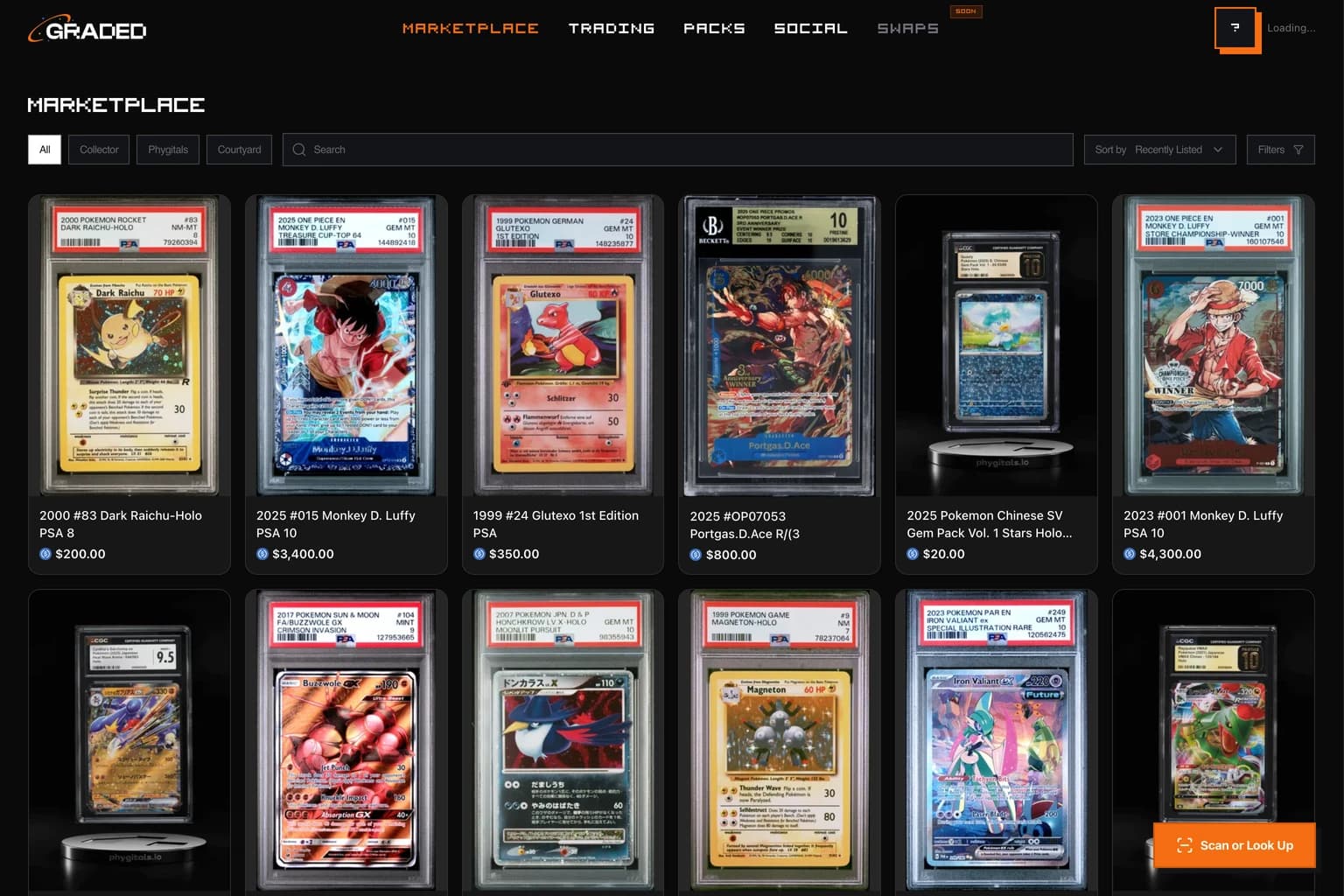
Graded World pulls live listings from eBay, Courtyard, Collector Crypt, and Phygitals into a single searchable dashboard. Look up a card once and see what it's actually selling for across all four platforms, side by side.
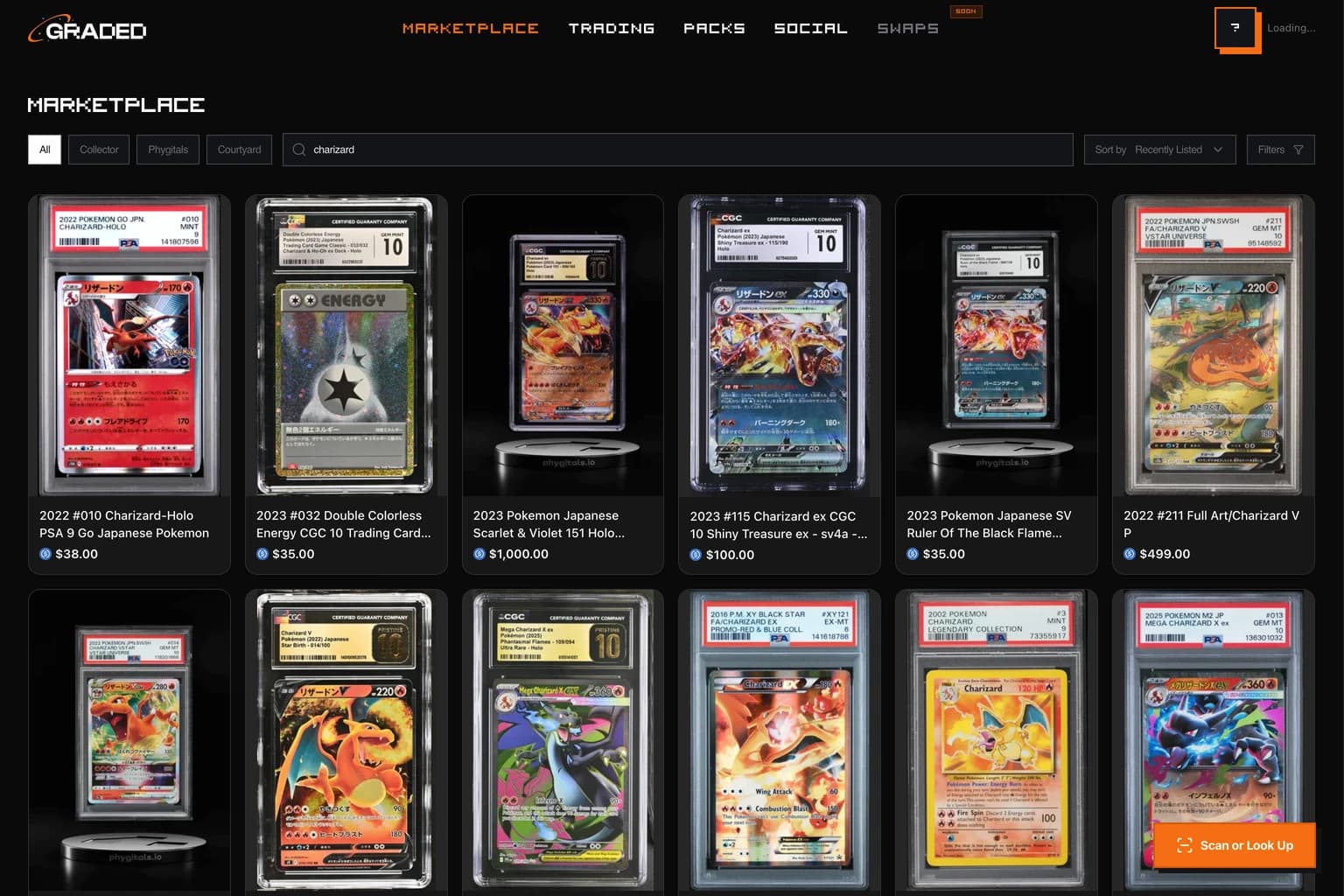
No tab-hopping. No manual price reconciliation. No missed deals because you were looking in the wrong place.
Graded World also hosts the largest listings of vaulted graded collectibles on any single platform — so if vaulted inventory is what you're after, the depth is there without hunting across marketplaces.
Beyond buying, you can track your entire graded portfolio in one place — whether your slabs are sitting in a Courtyard vault, listed on Collector Crypt, or physically in your collection. The card lookup tool shows cross-platform pricing whenever you're researching a purchase or sizing up a sale.
Peer-to-peer trading is live too. Want to swap slabs directly with another collector instead of going through a marketplace? That's inside the same dashboard.
Which Platform Should You Use?
Each platform has real strengths. eBay wins on volume. Courtyard wins on experience and pack ripping. Collector Crypt wins for Pokémon-focused trading with motivated sellers.
The honest answer: the best price on any given slab could be on any of them on any given day. Collectors who consistently buy well are checking all four — not just their preferred platform.
Graded World is built for exactly that. One search. Everything in one place.
View your dashboard at gradedworld.com.
FAQs
Where is the best place to buy graded Pokémon cards in 2026?
There's no single answer. eBay has the most volume, Courtyard offers a clean vaulted experience, and Collector Crypt is strong for Pokémon-specific tokenized trading. The best deal on a specific slab could be on any of them — which is exactly why cross-platform comparison matters.
What does "vaulted" mean when buying graded Pokémon cards?
The physical slab is held in a secure third-party facility. You own a digital token representing the card. Courtyard uses this model. You can typically request physical redemption, but the card doesn't ship to you at the time of purchase.
Do I need a crypto wallet to buy graded Pokémon cards on Collector Crypt?
Yes. Collector Crypt runs on Solana, so you'll need a Solana wallet before you can access listings or make a trade.
How do I compare graded Pokémon card prices across platforms?
Graded World aggregates live listings from eBay, Courtyard, Collector Crypt, and Phygitals into one dashboard. Look up any card and see current prices across all four platforms without switching between sites.
Are eBay prices for graded Pokémon cards reliable?
They vary widely. Sold listings give you a more accurate read than active listings. Graded World's cross-platform lookup pulls live data so you can see where a card is actually trading — not just where sellers hope it will.
Can I track my graded Pokémon card collection across multiple platforms?
Yes. Graded World's portfolio tracker lets you manage your slabs from one dashboard, whether they're vaulted, listed for sale, or physically in your hands.
What's the difference between PSA and CGC graded Pokémon cards when buying?
Both are widely respected. PSA 10s typically carry a price premium due to brand recognition and resale liquidity. CGC grades are solid and sometimes offer better value at equivalent condition levels. When comparing prices, always filter by the same grade and grading company — otherwise you're not comparing the same thing.