How to Track Your Graded Card Portfolio (Without Losing Your Mind)
You've got 30 slabs in a binder. Another 15 in a box. A PSA 10 Charizard you picked up six months ago, a CGC 9.5 Luffy you pulled from a vaulted pack, and a stack of sports cards you keep meaning to price out. You know roughly what you paid. You have no idea what any of it is worth right now.
Most collectors with 20 or more graded cards are in the same spot — managing their portfolio with gut feel, a half-updated spreadsheet, and four browser tabs that never agree on a price.
It works until it doesn't. A card spikes and you miss the window. You overpay on eBay because you didn't check Courtyard first. You lose track of your cost basis entirely.
There's a better way. But first, let's talk about what most collectors are actually using.
The Usual Suspects: How Collectors Track Graded Cards Today
Spreadsheets
The spreadsheet is the default. You log your slabs, what you paid, maybe a value you pulled from eBay last Tuesday. Better than nothing.
The problem is maintenance. Prices move constantly, and a manually updated spreadsheet is always behind. It also tells you nothing about where to buy or sell right now — it's just a ledger.
Collectr
Collectr is genuinely useful for raw card tracking. It covers over a million products across more than 20 TCGs and has built a large following for good reason. If you're managing an ungraded collection, it holds up.
But there's no marketplace integration. No live listings. No path from "this card is worth X" to "here's where I can actually buy or sell it." For graded collectors who want to act on price data, that gap is a real problem.
CollX
CollX does card scanning well, especially for sports cards. The AI-powered identification is fast and accurate. But like Collectr, it doesn't aggregate live listings across platforms — it tells you what a card is worth, not what you can do about it.
PriceCharting
PriceCharting is one of the most trusted price references in the hobby. It pulls daily from eBay, Heritage, and PWCC sales data, and collectors rely on it for historical context. But it's a reference tool, not a transactional one. You can't buy or sell through it. You can't track a portfolio of slabs. It's a price lookup, full stop.
The Tab Problem
Most collectors end up stitching all of this together. PriceCharting for reference, Collectr or a spreadsheet for tracking, then separate tabs for eBay, Courtyard, Collector Crypt, and Phygitals when they actually want to move a card. That's four or five tools doing a job that should be one.
What a Real Graded Card Portfolio Tracker Should Do
Before getting into solutions, it's worth being clear about what you actually need.
A proper graded card portfolio tracker should:
- Show your current holdings and what they're worth right now, not last week
- Pull live pricing from the platforms where graded cards actually trade
- Let you compare prices across marketplaces without opening separate tabs
- Give you a path from "I want this card" to actually buying it, in the same place
That last point is where most tools fall apart. Knowing a PSA 10 Charizard is worth $400 is useful. Knowing it's listed at $380 on Collector Crypt and $420 on eBay right now — and being able to act on that — is what actually saves you money.
How Graded World Handles This
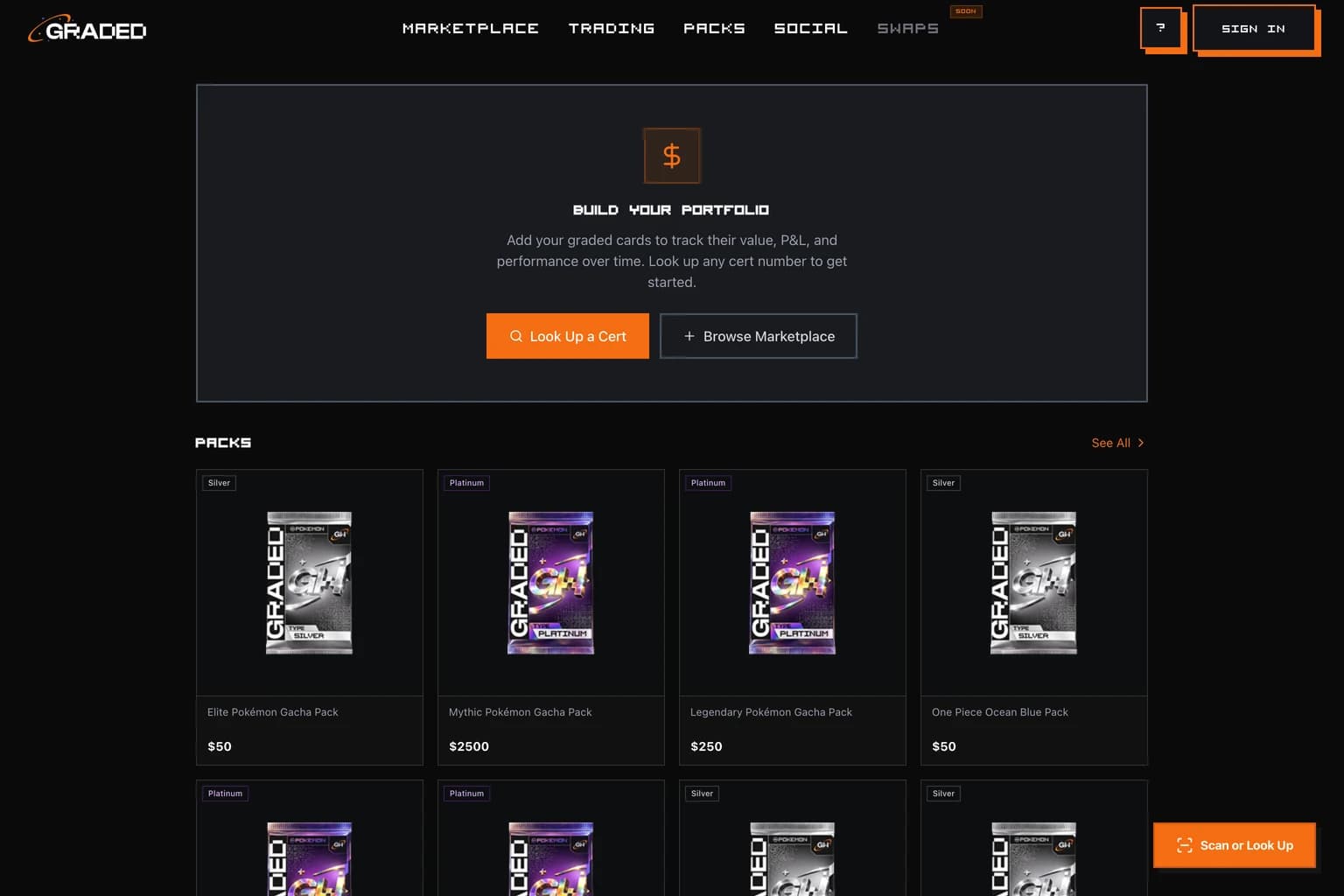
Graded World was built specifically for graded card collectors. Not raw cards. Not a general TCG tracker. Slabs.
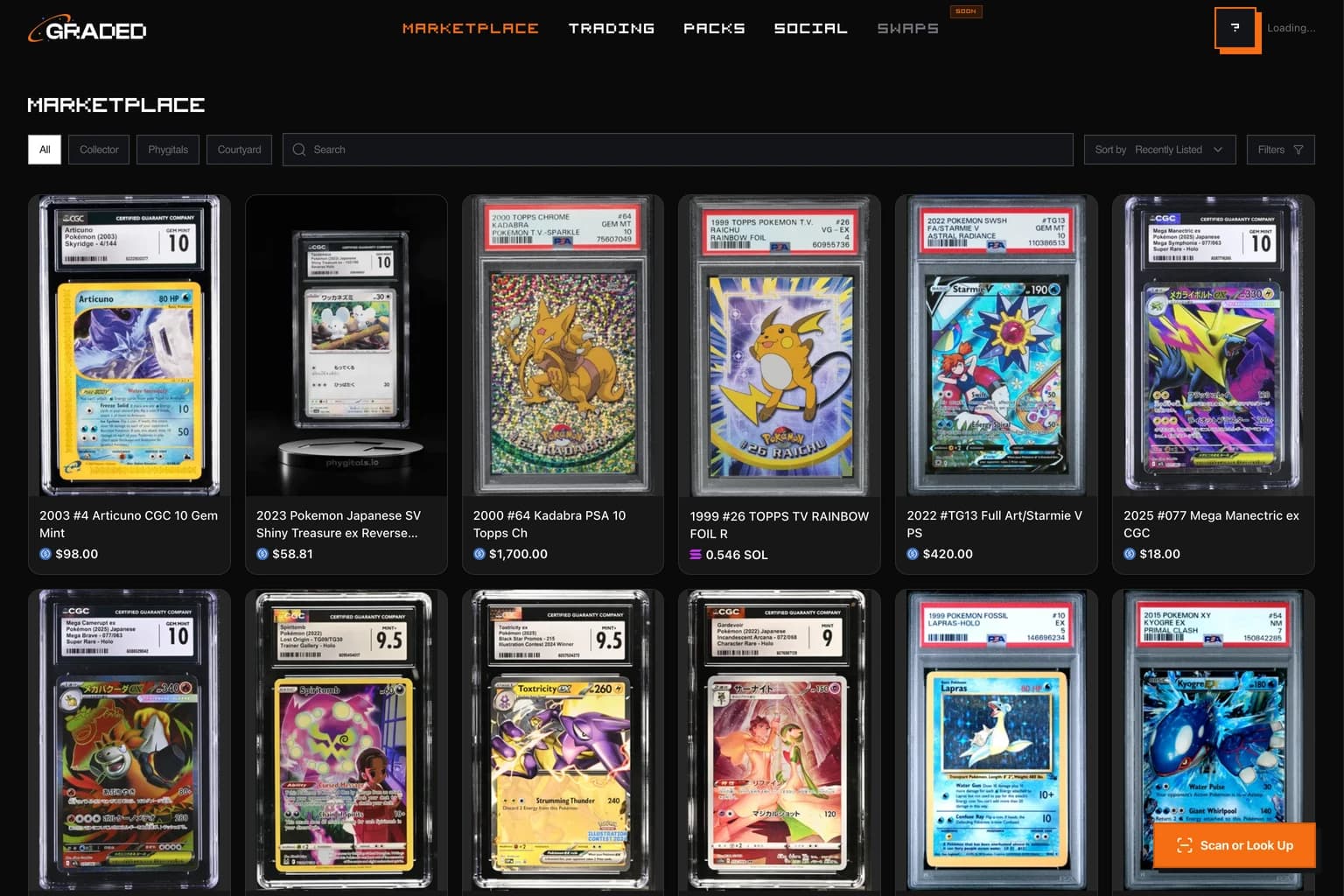
The portfolio tracker lets you log your PSA and CGC cards and see current values pulled from live market data. But what separates it from everything else is what sits alongside the tracker: a live aggregated marketplace pulling listings from eBay, Courtyard, Collector Crypt, and Phygitals — all at once, in one dashboard.
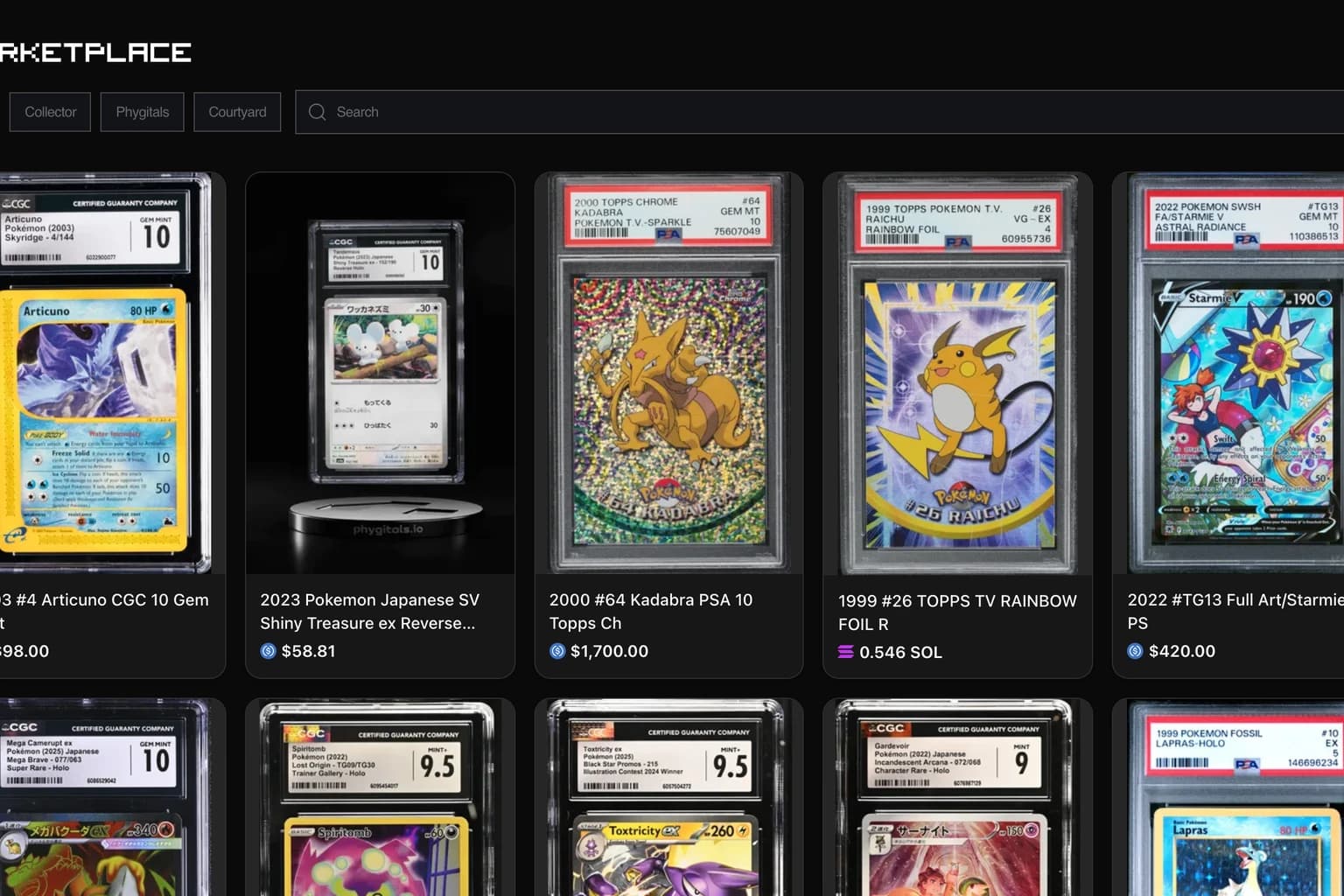
You're not looking at a price estimate. You're seeing actual listings across all four platforms, side by side. When you find something you want, you can buy it directly. No tab switching. No re-searching on each platform. No wondering if you missed a better deal somewhere else.
And here's the part no other tracker touches: three of those four — Courtyard, Collector Crypt, and Phygitals — are on-chain marketplaces. Prices there move in real time as vaulted and tokenized slabs change hands, and they regularly diverge from eBay. Collectr, CollX, and PriceCharting don't track any of it — they pull from eBay and traditional auction data and stop there. If a PSA 10 is trading cheaper on Collector Crypt than anywhere on eBay, every other app is blind to it. Graded World tracks those on-chain prices live.
Graded World also hosts the largest listings of vaulted graded collectibles on any single platform. If you're shopping for vaulted slabs specifically, that inventory depth matters.
No other tool does this combination. Collectr tracks but doesn't list. PriceCharting prices but doesn't sell. Courtyard sells but stays inside its own walls. Graded World sits across all of them.
Practical Tips for Managing a Graded Collection
Even with the right tool, a few habits make portfolio tracking much easier.
Log cards when you buy them, not later. Cost basis is easy to forget. The moment you acquire a slab is the right time to record what you paid.
Check cross-platform prices before every purchase. The same PSA 10 can trade at meaningfully different prices on eBay versus Courtyard versus Collector Crypt on the same day. A quick comparison before you buy is one of the easiest ways to avoid overpaying.
Set a review cadence. You don't need to check your portfolio every day. Picking one day a week to review current values against your cost basis keeps you from being caught off guard when something moves.
Separate your slabs by intent. Cards you're holding long-term, cards you're actively looking to sell, and cards you're open to trading are three different categories. Mixing them makes every decision harder than it needs to be.
Stop Managing Your Collection Across Five Tabs
The hobby is complicated enough. Tracking your graded portfolio shouldn't be.
If you're still bouncing between a spreadsheet, PriceCharting, and three marketplace tabs every time you want to make a move, you're spending time you don't need to spend. A single dashboard that tracks your slabs, shows live listings from every major platform, and lets you buy directly isn't a luxury — it's just a better workflow.
View your dashboard at gradedworld.com.
FAQs
What is a graded card portfolio tracker?
A graded card portfolio tracker lets you log your PSA, CGC, or other graded slabs, monitor their current market values, and manage your collection in one place. The best ones pull live pricing data rather than relying on manually updated estimates.
Why do spreadsheets fall short for tracking graded cards?
Spreadsheets require manual updates, which means your valuations are almost always out of date. They also have no connection to live marketplace listings, so they can't tell you where to buy or sell right now or whether the price you're seeing is actually competitive.
Does Graded World work for both PSA and CGC slabs?
Yes. Graded World supports portfolio tracking for both PSA and CGC graded cards, along with cross-platform price comparison and live listings from eBay, Courtyard, Collector Crypt, and Phygitals.
Can I actually buy cards through Graded World, or is it just a price tracker?
You can buy directly through Graded World. It aggregates live listings from four major marketplaces and lets you act on them without leaving the dashboard — which is the key difference from tools like PriceCharting or Collectr, which show prices but have no buying integration.
What platforms does Graded World pull listings from?
Graded World aggregates live listings from eBay, Courtyard, Collector Crypt, and Phygitals. No other single platform currently aggregates all four.
Does Graded World track on-chain marketplace prices?
Yes — and that's a core difference. Courtyard, Collector Crypt, and Phygitals are on-chain marketplaces where vaulted and tokenized slabs trade in real time. Graded World tracks those prices live alongside eBay. Collectr, CollX, and PriceCharting only pull from eBay and traditional auction data, so they miss on-chain pricing entirely.
Is Graded World only for Pokémon cards?
No. Pokémon is a major category, but Graded World covers sports cards and anime cards as well. It's built for graded card collectors broadly, not one TCG.
What makes Graded World different from Collectr or CollX?
Collectr and CollX are tracking and reference tools with no live marketplace integration. Graded World combines portfolio tracking with a live aggregated marketplace, so you can go from checking a card's value to buying it in the same place. That combination doesn't exist anywhere else right now.