Onchain TCG: What It Is and Everything You Can Actually Do With Tokenized Trading Cards
For its entire history, the trading card hobby ran on one awkward fact: the better a card got, the less you could do with it. Grade it, slab it, and the thing you paid a premium to protect becomes a brick — locked in a case, stored in a closet, sold only by photographing it, listing it, shipping it, and praying it survives a bubble mailer. The value went up; the usefulness went down.
Onchain TCG breaks that trade-off. It takes a real, graded, vaulted card and gives it a liquid digital twin — a token on a blockchain that moves at the speed of the internet while the physical slab sits safely insured. Suddenly the card you couldn't do anything with can be traded in seconds, sold globally with no shipping, opened in a pack, split into shares, borrowed against, or redeemed back to your hands whenever you want it.
This is a plain-English guide to what onchain TCG actually is, everything you can really do with it in 2026, and why Graded World can do almost all of it from a single login — including running what we think are the fairest gacha packs in the entire ecosystem. Let's get into it.
What "Onchain TCG" Actually Means
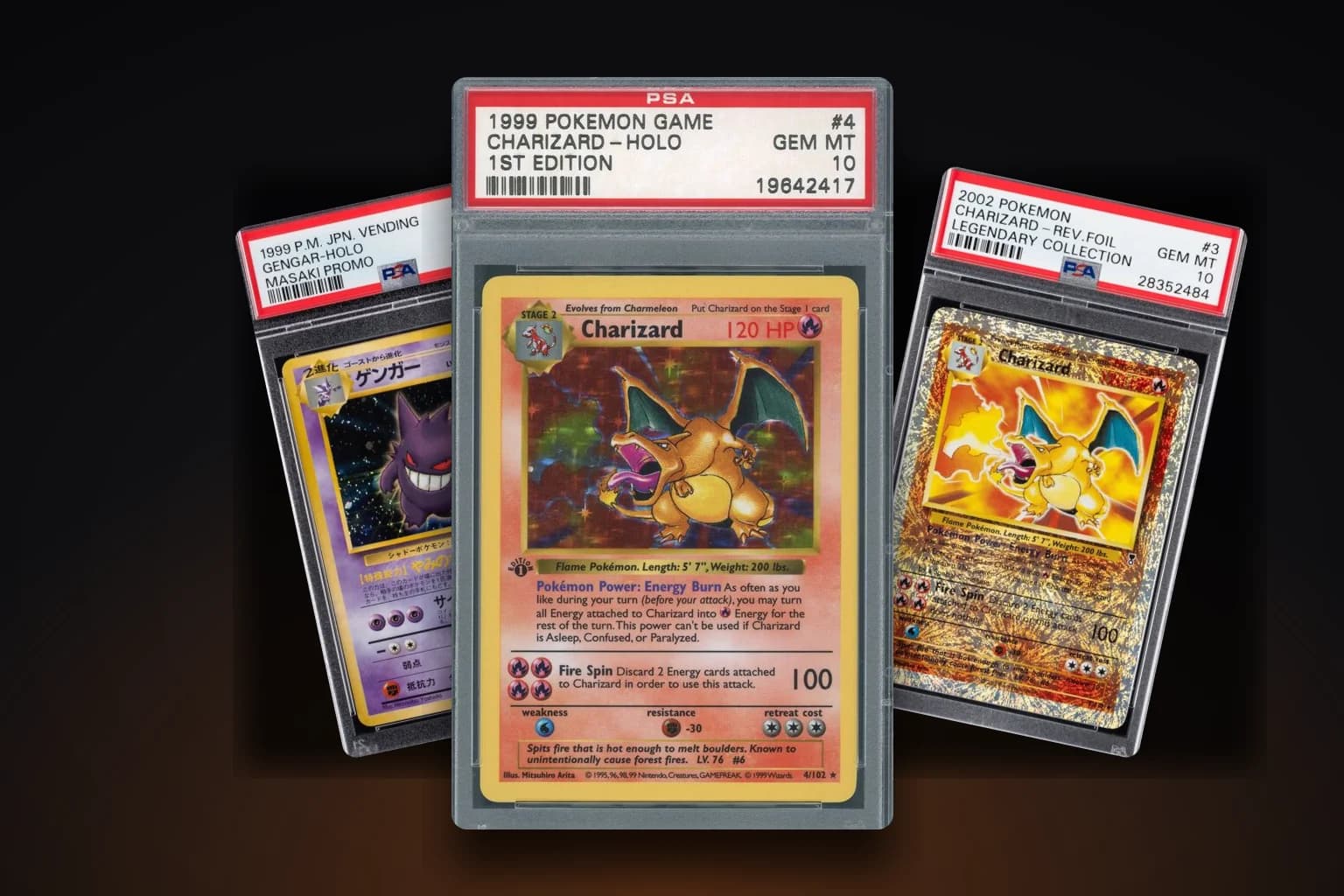
Strip away the jargon and it's simple. A physical graded card — a PSA 10 Charizard, a CGC 9.5 Umbreon — gets sent to a secure, insured vault. A token is minted on a blockchain that represents that exact card, one-to-one, carrying its grade, cert number, and provenance on chain. The slab never moves. The token is its liquid stand-in: whoever holds the token owns the card, and can redeem the physical slab at any time.
In finance terms, a graded card becomes a real-world asset (RWA) — a physical thing with a verifiable on-chain claim. That one change unlocks everything else, because a token can do things a slab in a closet never could: settle instantly, trade 24/7, split into fractions, plug into other apps. The card stops being a brick and becomes programmable.
And this isn't a fringe experiment anymore. In May 2026 the top tokenized-card platforms did $230 million in gacha pack sales in a single month — up roughly sevenfold year over year, with Solana handling about 64% of the volume. Collector Crypt has crossed a billion dollars in volume; Polygon-based Courtyard has too. And more than 30% of users have actually redeemed physical cards from the vaults — proof the real-world backing is real, not a story.
Everything You Can Actually Do With It
Here's the part that matters. "Tokenized card" sounds abstract until you see the list of things it lets you do that a physical slab simply can't. This is the real menu of onchain TCG.
1. Buy and sell in seconds — globally, for ~2% instead of ~13%
A tokenized card trades like any on-chain asset: you click, it settles in seconds, and you're done. No packing, no $6–$12 shipping label, no week of transit, no "arrived cracked" nightmare. Fees run around 2% versus eBay's ~13%, and a buyer in Tokyo is as easy as one across town — no customs forms, no international shipping quotes. For a deeper fee breakdown, see our guide to the best marketplace to buy and sell graded cards.
2. Open provably-fair gacha packs
Onchain packs recreate the booster-pack thrill with real graded cards inside. You pay for a pack, pull a random vaulted slab, and either keep it or instantly sell it back at a published buyback price. The difference from a retail booster is that the odds and the payout are transparent and — done right — independently verifiable. (More on why Graded's version is the fairest below.)
3. Trade and swap peer-to-peer, across collections
Want to swap your slab directly for someone else's instead of selling and re-buying? Onchain TCG makes a straight trade a single settled transaction — and you can sweeten it by mixing in SOL or USDC to balance a deal. Two cards, or a card plus cash, swapped atomically, with no marketplace middleman taking two cuts and no two rounds of shipping.
4. Tokenize your own card — and even fractionalize it
You're not limited to buying what's already on chain. You can take a graded card you own, deposit it into the vault, and mint its own tradable token. Want to sell a slice of a $20,000 grail instead of the whole thing — or let a hundred fans each own a piece? Fractionalizing turns one card into many tradable shares on a bonding curve, so it can have a live market price the way a stock does. Vaulted Cards Explained walks through the full mechanics.
5. Redeem the physical card whenever you want it
This is the anchor that makes the whole thing trustworthy: the token is always backed by a real card you can pull out. Own the card (or all of its fractional tokens) and you can redeem the physical slab from the vault and have it shipped to you. The digital convenience is optional, not a cage — you can always come back to holding it in your hands.
6. Use your collection as a real financial asset
Because a tokenized card is a genuine on-chain asset, it can do what other on-chain assets do — including serve as collateral. That means you can borrow against your collection without selling it: unlock liquidity, keep the upside, and repay to reclaim full ownership. A slab in a closet can't do that; a token can.
7. Track real value, live, across the whole market
Every position is on chain and every comparable sale is queryable, so your portfolio's value isn't a guess from a stale price guide — it's a live number drawn from what cards are actually trading for, onchain and off. See how to find the real price of a graded card for why that cross-market view matters.
8. Do all of it from an email login — no seed phrase
The old knock on "crypto" was the onboarding. That's mostly solved: modern onchain TCG apps create a wallet for you automatically when you sign in with email or Google, so you can buy, sell, pull a pack, and redeem without ever touching a seed phrase or a browser extension. The blockchain is plumbing; you just use the app.
The Catch: Onchain TCG Is Scattered
Here's the honest problem with the space right now. The activity is real, but it's fragmented. Collector Crypt lives on Solana; Courtyard issues on Polygon; Phygitals runs its own thing; eBay and the auction houses are entirely off chain. Each is a walled garden with its own inventory, its own wallet requirement, and its own prices — and most of them only let you do some of the list above. One platform has the packs but not a real marketplace. Another has the marketplace but not fractionalization. Their gachas say "provably fair," but try actually verifying your own pull and you usually hit a wall.
So collectors end up juggling three apps and two blockchains to do what should be one workflow — and still can't see the whole market or move freely across it.
The Marketplace: Buy From Every Issuer, Redeem in One Place
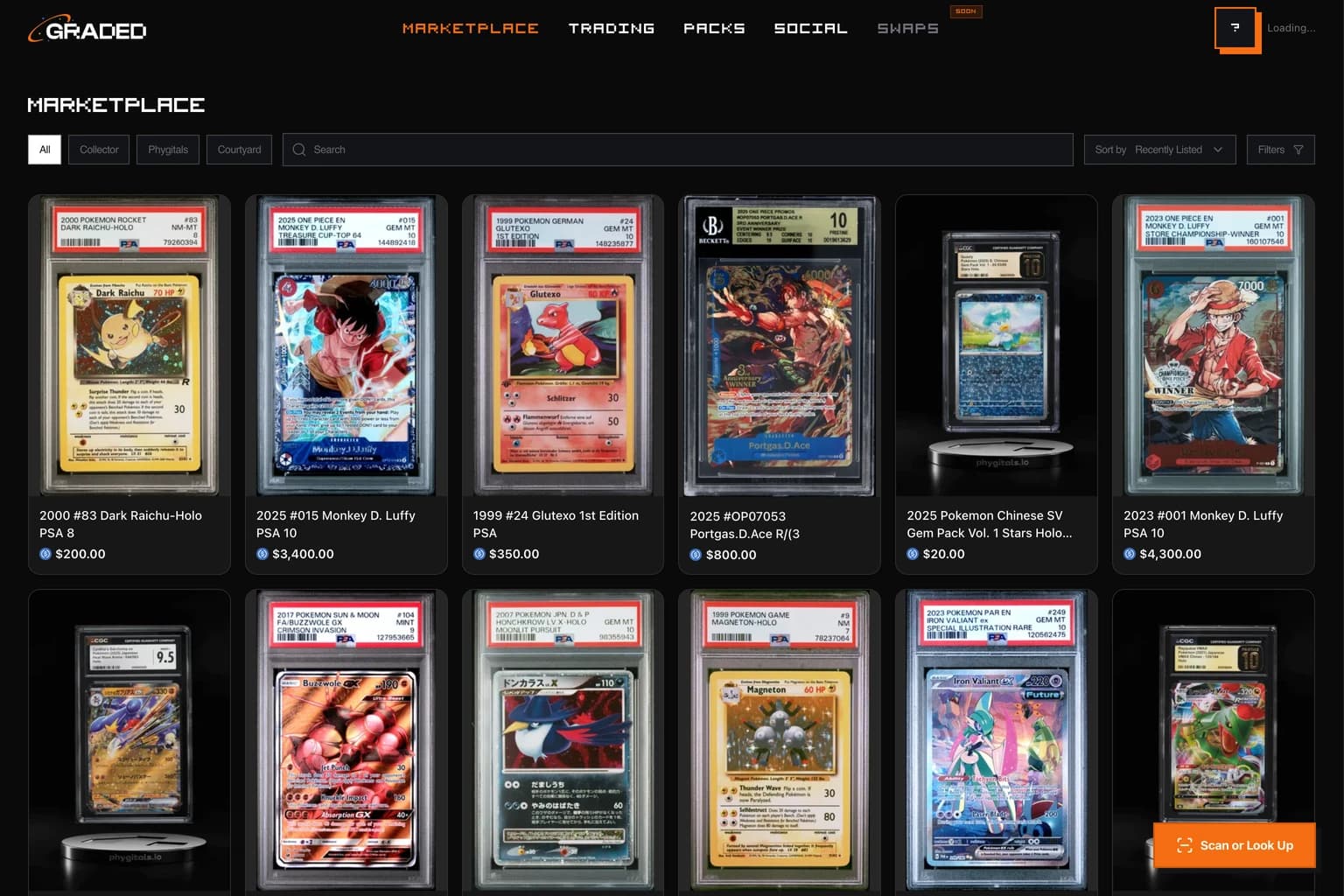
Graded World brings these scattered surfaces onto one screen — and the heart of it is the marketplace. It pulls inventory from the major onchain issuers — Collector Crypt, Courtyard, and Phygitals — into a single searchable catalog, sitting right alongside traditional eBay listings. Instead of opening three apps across two blockchains, you search once and see what's actually for sale everywhere, priced in USD and SOL side by side.
And you don't just window-shop. You can buy any card right there — paying in SOL or USDC, with the app handling the currency conversion for you — and then redeem the physical slab from the same place, whether it came from Collector Crypt, Courtyard, Phygitals, or a Graded pack. Buying and redeeming live in one flow: no purchasing on an issuer's storefront and then hunting somewhere else to claim the actual card. It all happens inside Graded.
Trading: A Live Floor to Trade Cards Peer-to-Peer
Buying and selling is one thing; trading slab-for-slab with another collector is what the hobby actually runs on — and it's nearly impossible to do cleanly across walled gardens. Graded's Trading Floor brings it onchain. It's a live room where collectors list cards for trade, say what they're after — cash, a specific card, a whole category, or just open to offers — and make offers on each other's slabs.
When two people agree, they move into a trade room where each side builds the deal: add cards, sweeten it with SOL or USDC, lock in, and sign. The swap settles atomically through on-chain escrow — either the whole trade goes through or none of it does, so nobody ships first and hopes. A live activity ticker and floor chat run alongside it, so the floor feels like a card show, not a checkout page — the card-show trade table, online, with onchain settlement underneath.
Social & The Feed: Watch the Whole Market Move, Live
One of the quiet superpowers of putting cards onchain is that everything becomes visible. Graded's Social feed is a real-time stream of what's happening across every collection — sales, listings, pack pulls, and redemptions — the moment each one lands on chain.
Every row is a real event: someone bought a Charizard for 5.5 SOL, someone listed a PSA 9 Gyarados, someone pulled a CGC 8 Blastoise from a pack, someone redeemed a Base Set Charizard out of the vault. You can filter to just sales, listings, packs, or redeems, and tap any wallet to open that collector's profile. It's part market-pulse dashboard, part entertainment — and it only exists because the activity is onchain and public in the first place. Where an offchain market hides its real flow, onchain TCG broadcasts it, and the feed is where you watch the whole market move in real time.
The Fairest Gachas in the Ecosystem — and Why That's Provable
Every onchain pack platform claims its gacha is "provably fair." The phrase has become marketing wallpaper. So here's the real test: can you, personally, verify that your specific pull was honest — without trusting the company's word? On most platforms, no. On Graded, yes — and that's the whole point.
Every Graded pull is built to be checked, end to end:
- The randomness is cryptographic, not a black box. Each pull is decided by a Verifiable Random Function (ECVRF, the RFC 9381 standard). The result is mathematically tied to your payment transaction, so it can't be cherry-picked after the fact — and anyone can re-derive it from the published proof.
- The prize pool is frozen before you pay. The exact set of eligible slabs is snapshotted and committed with a Merkle root at the moment your pack is created. The house can't quietly swap a chase card out of the pool after you've committed — the commitment is locked and public.
- There's a public verification you can run yourself. Graded exposes the full proof bundle — the VRF proof, the frozen candidate snapshot, and the Merkle proof that your card was in it — so you (or anyone) can independently re-compute the pull and confirm it was legit. "Provably fair" isn't a slogan here; it's a button.
- Odds are tied to real insured value. Pack contents are weighted by each card's insured fair-market value, and the pack's expected value — the average value of a random pull — is shown before you buy. You see your edge up front instead of guessing.
- There's a real exit. Don't love your pull? An instant buyback at a published rate (around 85% of the card's fair-market value) gives you a price floor and immediate liquidity, not a useless card and a shrug.
Credit where it's due: Collector Crypt proved onchain gacha could be huge and reputable, and it deserves the volume it's earned. Graded's bet is that the next standard isn't just "fair" — it's fairness you can audit yourself, on every single pull, combined with a buyback that actually protects you. If you want the full economics of how the packs and contributor pools work, read The Gacha Protocol, and see live packs on the Graded packs page.
Is Onchain TCG Right for You?
If you love the ritual of physical collecting — binders, the smell of a fresh pack, a slab on the shelf — none of this replaces that, and it shouldn't. Redeem anytime and hold what you love.
But if you've ever been frustrated that your best cards are illiquid, that selling means a week of logistics and a 13% haircut, that you can't easily put money to work in the hobby, or that you can't see the whole market at once — onchain TCG is built for exactly those frustrations. It's the difference between owning a card and being able to do something with it. Start at gradedworld.com.
FAQs
What is onchain TCG?
Onchain TCG (tokenized trading cards) means a real, graded, physical card is stored in an insured vault and represented one-to-one by a token on a blockchain. The token carries the card's grade and provenance, can be traded, sold, fractionalized, or used in packs instantly, and can be redeemed for the physical slab at any time. The card becomes a liquid, programmable asset instead of a brick in a case.
What can I do with a tokenized card that I can't do with a physical one?
Sell or trade it in seconds with no shipping, for fees near 2% instead of ~13%; reach buyers globally with no customs or shipping quotes; open it in or pull it from a pack; split it into fractional shares; use it as collateral to borrow against; and track its live value across the whole market. The physical slab can do none of that while it sits in storage — but you can still redeem it whenever you want.
Is onchain TCG safe? What backs the token?
Each token is backed one-to-one by a specific physical card held in an insured, secure vault, with the cert and provenance recorded on chain. Reputable platforms let you redeem the real slab at any time, which is the ultimate proof the backing is real — over 30% of users in the space have actually redeemed physical cards. The main thing to learn is the basic wallet/app flow, which on modern platforms is as simple as an email login.
Do I need crypto experience or a wallet to start?
No. Platforms like Graded World create a Solana wallet for you automatically when you sign in with email or Google — no seed phrase, no browser extension. You can pay with USDC or SOL, and the blockchain runs in the background while you just use the app.
What makes Graded's gacha packs the fairest?
Every pull is decided by a verifiable random function (ECVRF), the eligible card pool is frozen and committed with a Merkle root before you pay, and Graded publishes the full proof so anyone can independently re-compute and verify their own pull. Odds are weighted by real insured value, expected value is shown before purchase, and an instant ~85% buyback gives a real price floor. Most platforms say "provably fair" — Graded lets you actually check it.
Can I get the physical card if I change my mind?
Yes. Owning the card (or all of its fractional tokens) lets you redeem the physical slab from the vault and have it shipped to you. On Graded, redemption is trustless — it's enforced by the on-chain vault contract, so you don't need the company's permission to claim what's yours.
Which blockchain does onchain TCG run on?
It varies by platform — Collector Crypt and Graded World run on Solana, while Courtyard issues on Polygon. Solana currently handles the majority of tokenized-card gacha volume thanks to fast, low-cost transactions. Graded World aggregates across platforms so you don't have to pick a single ecosystem.