PSA 9 vs PSA 10: Is the Price Difference Worth It?
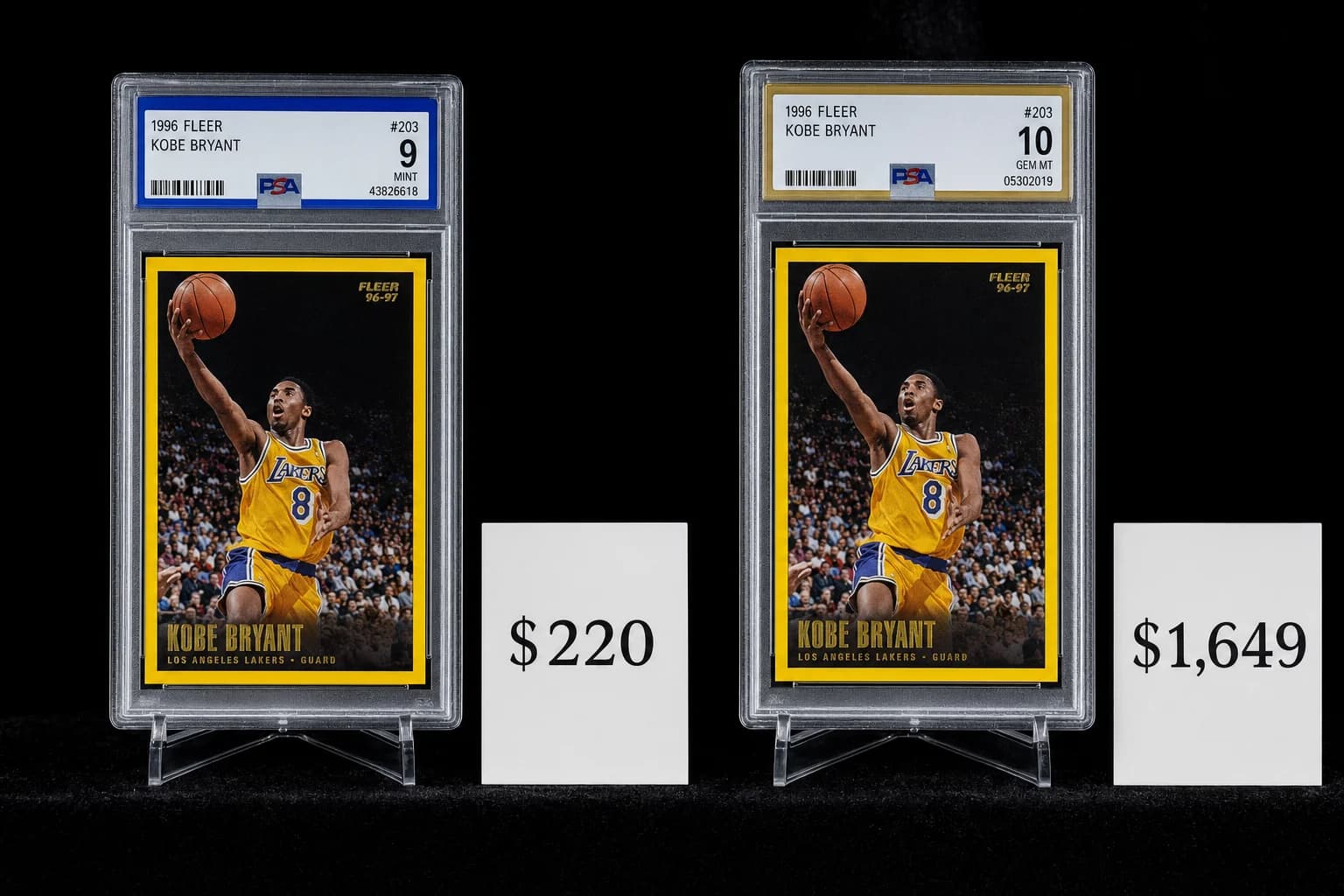
A PSA 10 Kobe Bryant Rookie Exclusives sells for $1,649. The PSA 9? $220. That's a 7.5x premium for one grade point. But a modern One Piece card? The PSA 10 barely costs more than raw. The PSA 9 vs PSA 10 price difference isn't fixed — it's driven by gem rate, population, and card era. Here's how to know when you're paying a smart premium and when you're lighting money on fire.
How Big Is the PSA 9 vs PSA 10 Price Gap?
It depends entirely on the card. We pulled real market data to show the range:
Vintage Example: Kobe Bryant 1996 Upper Deck Rookie Exclusives #R10
| Grade | FMV | Pop Count | Gem Rate |
|---|---|---|---|
| PSA 10 | $1,649 | 328 | 7.45% |
| PSA 9 | $219.99 | 1,692 | — |
| Premium | 7.5x | — | — |
With a gem rate under 8%, most submitted copies don't come back as a 10. That scarcity is real — only 328 exist in PSA 10 versus nearly 1,700 in PSA 9. The market prices that rarity aggressively.
View Kobe Bryant Rookie Exclusives on Graded.World →
Modern Example: Monkey D. Luffy PRB01 Alt Art #024
| Grade | FMV | Pop Count | Gem Rate |
|---|---|---|---|
| PSA 10 | $140.14 | 234 | 90% |
| Recent Sales: $140, $206, $228, $186, $225, $200 | |||
When 90% of submissions come back as a 10, there's nothing rare about the grade. The premium over PSA 9 is minimal because supply is abundant relative to demand.
View Luffy PRB01 Alt Art on Graded.World →
Why PSA 10 Premiums Vary So Much
The PSA 9 vs PSA 10 value gap comes down to three factors. Miss any of them and you'll overpay.
1. Gem Rate Is the Biggest Driver
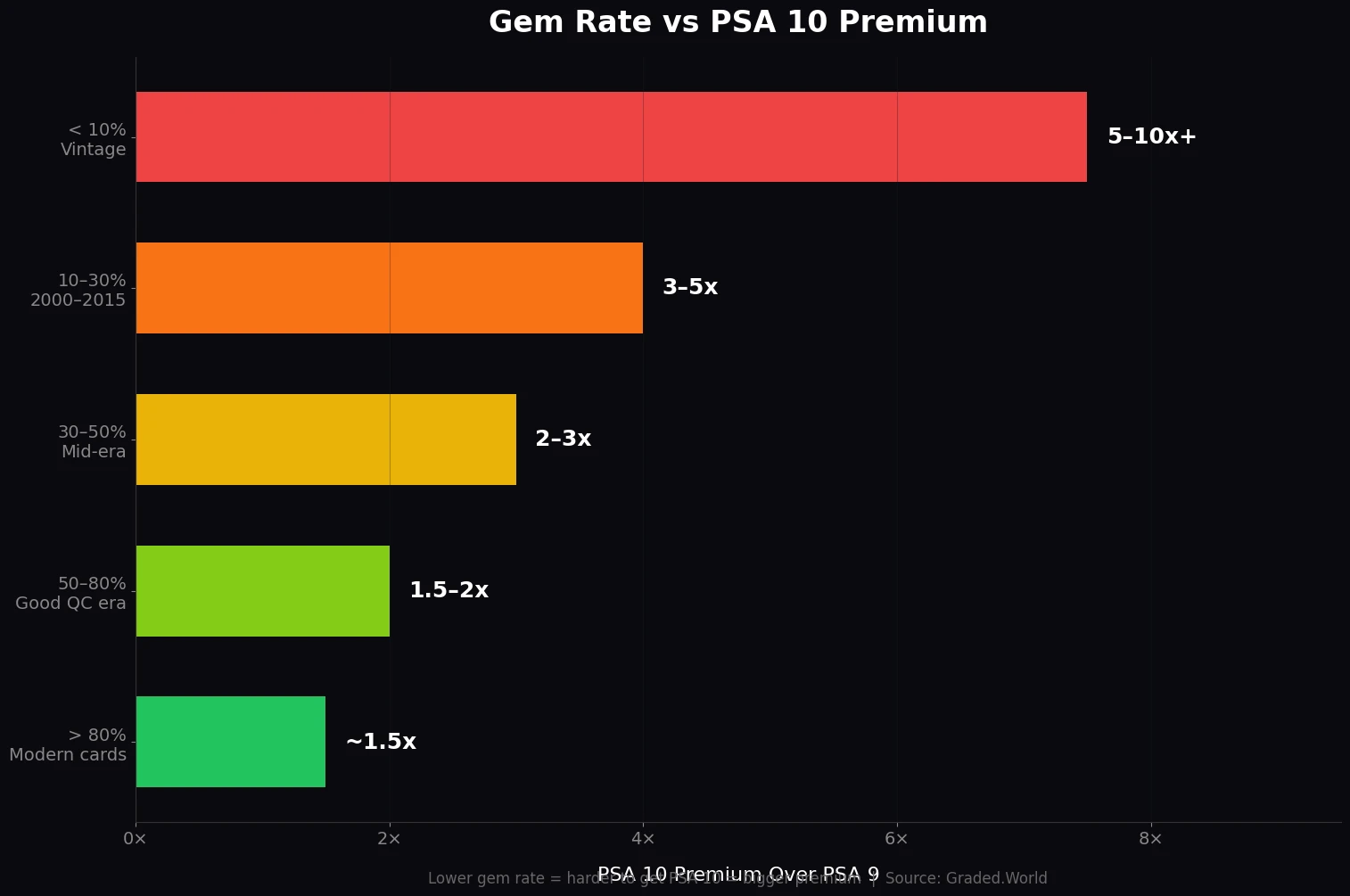
Gem rate = percentage of submissions that grade PSA 10. This is the single most important variable:
| Gem Rate | Typical PSA 10 Premium | Card Type |
|---|---|---|
| < 10% | 5-10x+ over PSA 9 | Vintage, pre-2000 |
| 10-30% | 3-5x | Mid-era, 2000-2015 |
| 30-50% | 2-3x | Modern, good QC |
| > 50% | 1.5-2x | Modern, excellent QC |
| > 80% | Minimal | Most modern cards |
Low gem rate = massive premium. When fewer than 1 in 10 copies earn a 10, you're buying genuine scarcity. The Kobe at 7.45% gem rate commands 7.5x because the market knows how hard that grade is to achieve.
High gem rate = modest premium. The Luffy at 90% gem rate means almost every copy is a 10. There's no achievement in the grade, so the market doesn't reward it.
2. Pop Count Creates (or Destroys) Scarcity
Population count is the total number of copies graded at that level. Here's what most collectors miss:
A PSA 9 with a pop of 50 can be worth more than a PSA 10 with a pop of 5,000.
Why? Scarcity isn't about the number on the label — it's about how many exist at that grade. If a card has 5,000 PSA 10s floating around, the supply is deep and price pressure is downward.
Always check the PSA Pop Report before buying. If the PSA 10 pop is climbing fast, the premium will compress over time.
3. Card Era Sets the Baseline
| Era | PSA 10 Premium Range | Why |
|---|---|---|
| Pre-2000 (Vintage) | 5-10x+ | Poor print quality, decades of circulation |
| 2000-2015 (Mid-era) | 3-5x | Better QC but still imperfect |
| Post-2020 (Modern) | 1.5-3x | High print quality, pack-to-slab culture |
When to Buy PSA 10 vs PSA 9: The Investment Framework
Here's how we think about it at Graded.World. No hedging — concrete guidelines:
Buy PSA 10 When:
- Gem rate is under 15%. You're buying real scarcity that can't be manufactured.
- Pop count is under 500. Limited supply with room for demand to grow.
- It's a key card (rookie, first edition, chase card). These hold the premium floor long-term.
- You're holding 3+ years. PSA 10 premiums on iconic cards tend to expand over time.
Buy PSA 9 When:
- Gem rate is over 50%. The PSA 10 premium is mostly psychological, not structural.
- PSA 10 pop is over 2,000 and climbing. Supply is deep and getting deeper.
- Budget matters. A PSA 9 Kobe at $220 vs $1,649 for the 10 — 87% less capital.
- You want the card, not the investment. For personal collections, PSA 9 is the sweet spot.
The 80/20 Rule for Portfolios
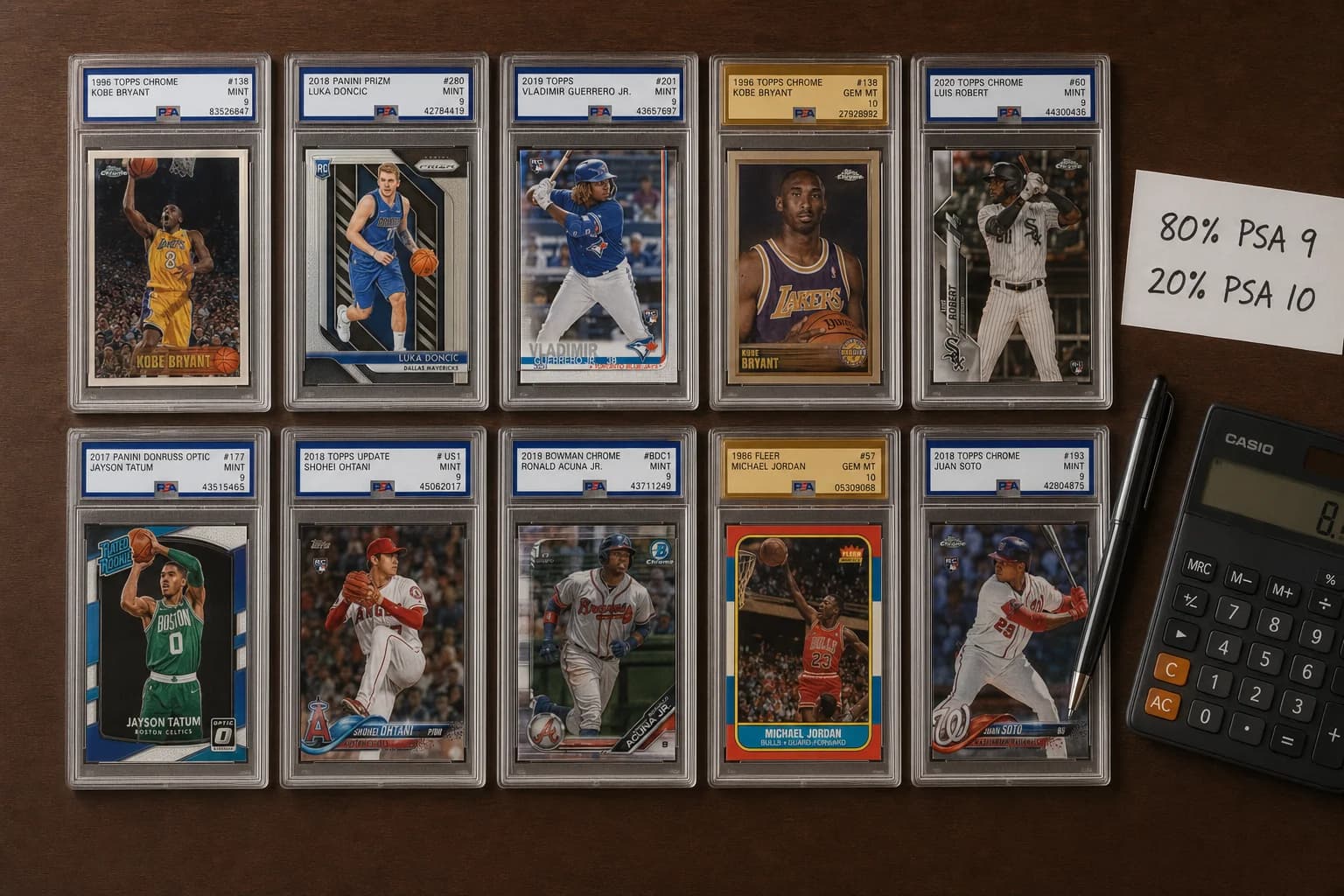
If you're building a graded card portfolio, consider: 80% PSA 9s for broad exposure, 20% PSA 10s for high-conviction plays. The PSA 9s give you diversification and liquidity. The PSA 10s give you upside on cards where the gem rate justifies the premium.
Track your portfolio's value in real-time on Graded.World — we pull live market data so you always know where you stand.
Common Mistakes When Evaluating PSA 9 vs PSA 10
Assuming PSA 10 always appreciates faster. It doesn't. When gem rates are high, PSA 10 and PSA 9 prices move roughly in tandem.
Ignoring pop trends. A PSA 10 with pop 200 today might have pop 2,000 next year if it's a modern card with heavy submission volume.
Buying PSA 10 modern cards as "investments." Most post-2020 cards with 60%+ gem rates won't hold their PSA 10 premium.
Comparing across eras. A 3x premium on a 1990s card is very different from a 3x premium on a 2024 card. Context matters.
FAQ
Is a PSA 10 worth the extra money?
It depends on the card's gem rate. For vintage cards with gem rates under 10%, the PSA 10 premium reflects genuine rarity. For modern cards with gem rates above 50%, the premium is often not justified.
How much more is a PSA 10 worth than a PSA 9?
PSA 10 typically commands 2-10x the price of a PSA 9. Vintage cards see 5-10x+ premiums. Modern cards usually see 1.5-3x premiums.
Does PSA 9 hold value well?
Yes. PSA 9 cards are the most liquid grade in the hobby — enough supply for active trading, enough quality to satisfy collectors.
Should I buy PSA 9 or PSA 10 for investment?
Check the gem rate first. If it's under 15%, the PSA 10 is structurally scarce and worth the premium. If it's over 50%, buy the PSA 9 and deploy the savings into additional cards.
What gem rate makes a PSA 10 worth the premium?
Below 15-20% is where PSA 10 premiums become structurally justified. Below 10% — like the Kobe at 7.45% — you're looking at genuinely rare cards where the premium tends to expand over time.
Can a PSA 9 be worth more than a PSA 10?
Absolutely. If a PSA 9 has a population of 50 and the PSA 10 has a population of 5,000, the PSA 9 is the scarcer card at that grade. Pop count matters more than the number on the label.