
The Best Japanese Pokemon Cards to Invest In (2026), in PSA 10
On this page
Every Pokémon card in existence is a translation of a Japanese original, and the Japanese market is where the hobby's deepest history and steepest discounts live side by side. The 1996 Japanese Base Set Venusaur, printed three years before English Pokémon existed, trades at ~$4,189 in PSA 10 against $38,400 for its English 1st Edition descendant. The Neo-era Japanese trophies trade in the low thousands. And the modern Japanese SAR class carries the deepest gem volume in the entire hobby. Ten cards, all on real PSA 10 sold comps from Graded's pricing engine (eBay and Fanatics).
A methodology note: our character guides quote English printings and exclude Japanese sales by design; this guide inverts the filter. Same engine, same standards, the other half of the market. Nothing here is financial advice.
- The 1996 Base Set cards are the true firsts: the Japanese Venusaur (~$4,189 on 14 gem comps) predates every English card, at 11% of the English 1st Edition's price.
- Every card is quoted in PSA 10. Japanese print quality runs higher, so gem populations are relatively larger and the 9-to-10 premium narrower: factor it into pricing.
- The forgotten Japanese eras are the sleeper class: Neo 4 Dark Espeon (~$2,200) and the 2010 Reviving Legends Espeon (~$900) trade on single-digit floats.
- Modern SARs carry the volume: the Crimson Haze Eevee has 118 gem comps, Terastal Fest SARs 40-90 each: the deepest accumulation markets in the hobby.
- The JP discount is structural, not temporary: plan positions around it rather than betting on convergence.
The Framework: How Japanese Cards Differ
- Priority is real: Japanese printings predate English by years; the 1996-1999 cards are the hobby's actual firsts.
- Supply is larger, condition better: bigger print runs and better print quality mean more gems per printing, which is the root of the JP discount.
- Exclusives cut the other way: Japan-only promos and sets (anniversary collections, deck exclusives) have no English twin and price independently.
- The graded market is younger: JP grading volume exploded only after 2020, so old-era JP floats are still being discovered.
- Exits are thinner in the West: the discount partly prices market access; sell-side patience is part of the position.
The Japanese Ladder
Ten cards, on real PSA 10 sold comps:
Bars use a logarithmic scale so every rung is visible. Every value is a real 2025-2026 PSA 10 sold comp, not an asking price.
1996 Base Set Venusaur: The Origin Grail
The engine has every PSA 10 sale:
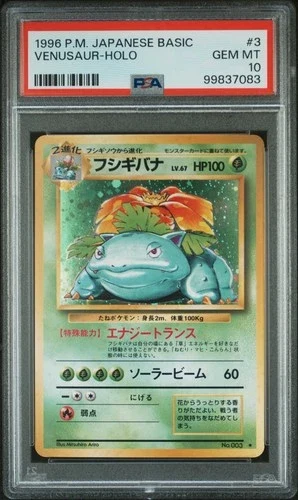
Real sold comps from Graded's pricing engine · 14 sales (eBay & Fanatics).
~$4,189 on 14 gem comps: the first Venusaur ever printed, from the no-rarity 1996 sheets, at 11% of its English 1st Edition descendant's $38,400. The priority argument (the Japanese original IS the first edition) has been closing this class of gap for years, and the 1996 cards are its purest expression.
2001 Neo 4 Dark Espeon: The Neo-Era Trophy
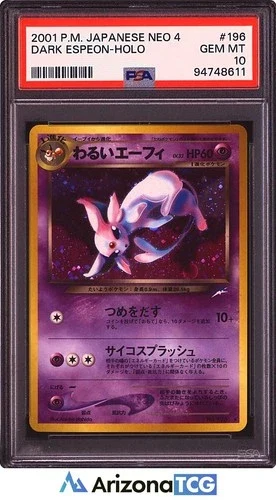
Real sold comps from Graded's pricing engine · 5 sales (eBay & Fanatics).
~$2,200: Darkness and to Light's Dark Espeon, a Japan-exclusive artwork with no English printing at all, riding the same Eeveelution engine that printed Espeon's $90,000 star. Japan-exclusive + family engine is this guide's strongest combination.
1999 Bulbasaur Deck Venusaur: The Deck Exclusive
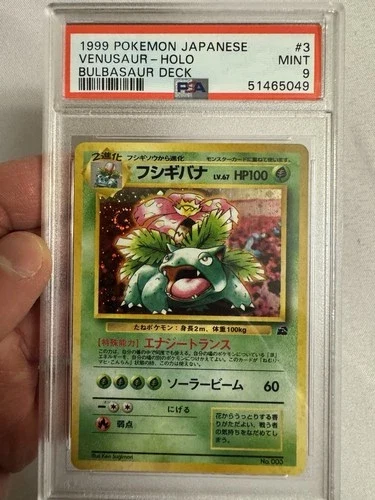
Real sold comps from Graded's pricing engine · 1 sales (eBay & Fanatics).
~$1,076 on a nearly nonexistent float: the VHS-era starter-deck Venusaur, a distribution channel (preconstructed decks) that produced some of Japan's scarcest 90s cards. Thin-market rules apply in full.
2010 Reviving Legends Espeon: The Forgotten Era
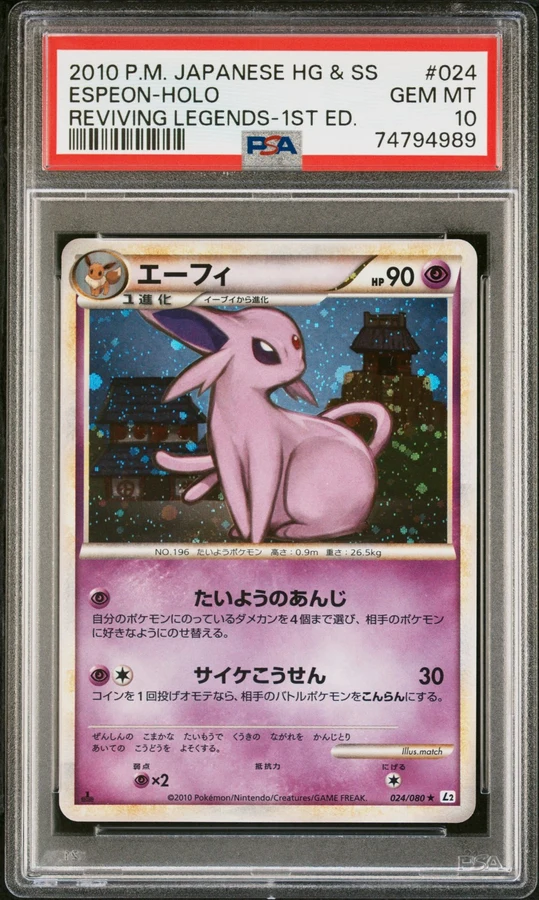
Real sold comps from Graded's pricing engine · 6 sales (eBay & Fanatics).
~$900: the LEGEND-era Japanese Espeon from the hobby's quietest years, the same forgotten-era arithmetic that repriced the English HGSS Primes. Six gem comps; the float barely exists.
The Modern SAR Class: Terastal, 151, Crimson Haze
Modern Japanese special-art rares are the hobby's deepest gem markets, and five of them form this guide's accumulation tier. The Terastal Fest Sylveon SAR (~$295) and 151 Venusaur SAR (~$269 on 71 comps):
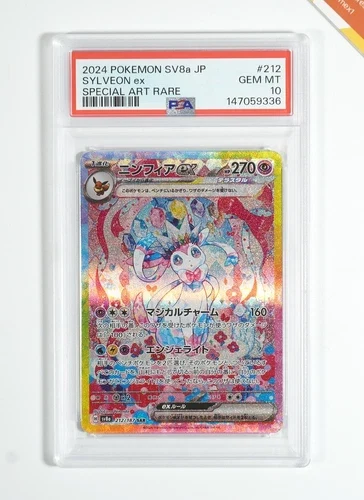
Real sold comps from Graded's pricing engine · 40 sales (eBay & Fanatics).
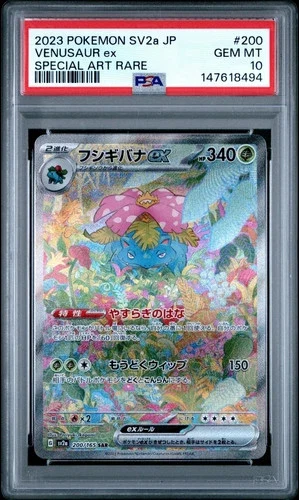
Real sold comps from Graded's pricing engine · 40 sales (eBay & Fanatics).
The 25th Anniversary Venusaur promo (~$190), the Terastal Espeon SAR (~$165 on 50 comps), and the Crimson Haze Eevee Art Rare, whose 118 gem comps make it the single deepest card market in this entire series:
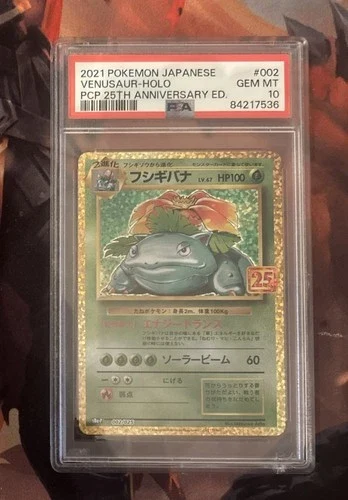
Real sold comps from Graded's pricing engine · 25 sales (eBay & Fanatics).
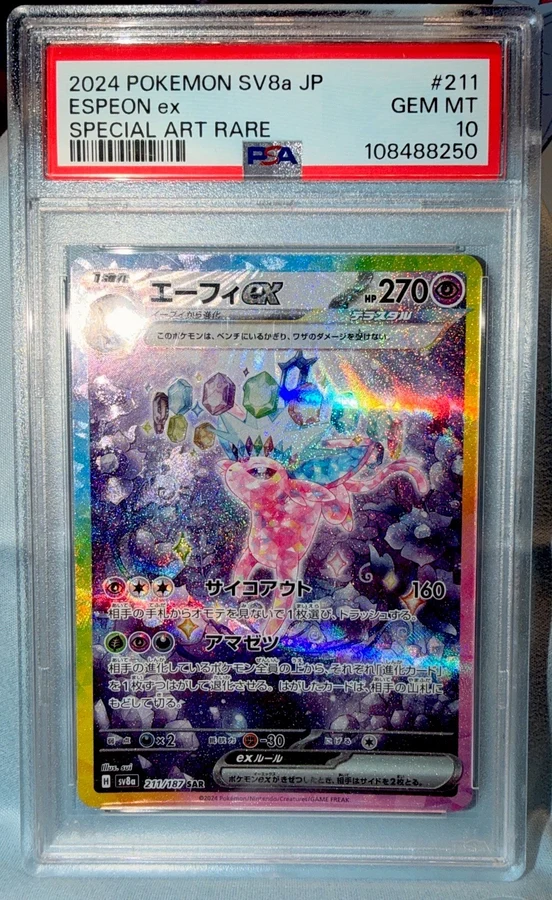
Real sold comps from Graded's pricing engine · 40 sales (eBay & Fanatics).
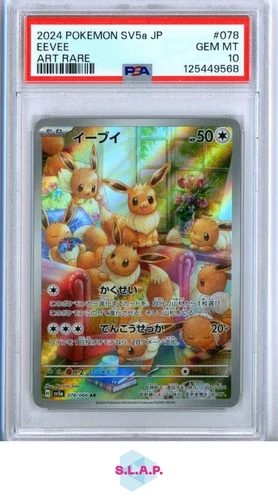
Real sold comps from Graded's pricing engine · 40 sales (eBay & Fanatics).
The Entry: Japanese GO Radiant Venusaur
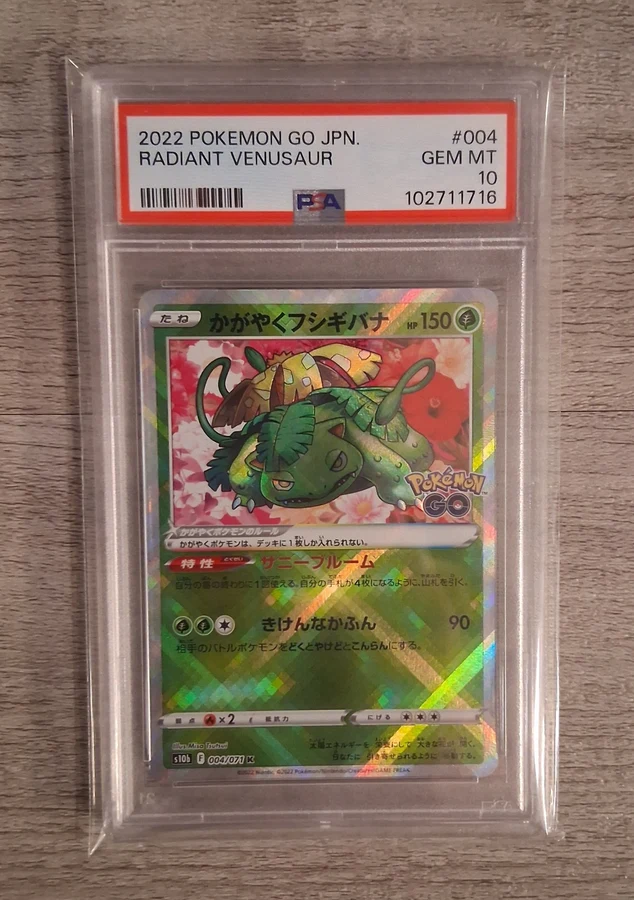
Real sold comps from Graded's pricing engine · 21 sales (eBay & Fanatics).
~$57 on 21 comps: the cheapest liquid claim in this guide, the Japanese twin of the English Radiant tier our Venusaur guide covers.
The Discount, the Exclusives, and the JP Premium Logic
- Twins trade at 40-60% of English: structural, driven by supply and access, not error. Price JP against JP.
- Exclusives have no twin and no anchor: the Neo 4 Espeon and deck holos price on their own scarcity, which is where the asymmetry lives.
- 1996 priority is the long thesis: the true first printings of the most valuable franchise in collecting, at single-digit percentages of English equivalents.
- Modern SAR volume is the feature: the deepest, most honest gem markets in the hobby, built for accumulation.
How High Can Japanese Cards Go?
The reference events are public: Japanese No. 1 Trainer trophies and the Illustrator sit atop the entire hobby's price history. Beneath the trophies, the JP market's question is how much of the access discount closes as global grading normalizes. The asset class is still tiny:
Total market value: collectibles as an asset class, next to gold, mega-cap tech, and crypto.
The right column is how many times bigger each one is than the entire collectibles market. Collectibles are already a real asset class, larger than a top-ten crypto like Dogecoin, yet still a fraction of a single mega-cap stock and barely a rounding error next to gold. That gap is the runway: as collectibles mature into a transparently priced, investable asset class, the best cards have room to re-rate that the giants no longer do.Figures approximate, 2026: gold = all above-ground gold; equities = market cap; crypto = network value; collectibles = estimated global market size. Bars use a log scale for visibility.
And the returns case is on the board:
Matching Japanese Cards to Your Risk Tolerance
Anchor in the 1996 originals and the exclusive artworks (no-anchor scarcity), accumulate the SAR class, and treat convergence-with-English as upside rather than base case. Sell-side patience is part of every JP position.
How to Buy Japanese Cards Safely
- Price off sold comps, never listings, via Graded's value calculator.
- Price JP against JP: using English comps on Japanese cards is the most common mistake in this market, in both directions.
- No-rarity versus rarity 1996 printings differ; as always, the printing is the card.
- Trade without shipping risk on Graded's Trading Floor.
Investing in Japanese Cards on Graded
Real fair-market values with the value calculator, authenticated slabs in the marketplace, instant settlement on the Trading Floor.
FAQs
Are Japanese Pokémon cards worth investing in?
Yes, with the right frame: they are the hobby's true first printings and its deepest modern gem markets, trading at a structural 40-60% discount to English twins. The winning positions are the exclusives (no English anchor) and the 1996 originals, not convergence bets on twins.
Why are Japanese Pokémon cards cheaper than English?
Larger print runs, better print quality (more gems per printing), and thinner Western exit liquidity. The discount prices real differences; it has narrowed over time but is structural, not a mispricing.
What is the best Japanese Pokémon card to invest in?
On our comps: the 1996 Base Set Venusaur (~$4,189, the true first printing at 11% of its English descendant), the Japan-exclusive Neo 4 Dark Espeon (~$2,200), and the modern SAR class for accumulation (Crimson Haze Eevee: 118 gem comps).
Do Japanese cards grade better?
Yes: Japanese print quality yields meaningfully higher gem rates, which is why their PSA 9-to-10 premiums run narrower than English. Buy 10s for the position, but expect less premium expansion than English cards deliver.
Should I buy Japanese exclusives or twins of English cards?
Exclusives, for thesis positions: no English anchor means they price on their own scarcity (the Neo 4 Espeon has no twin to discount against). Twins are for accumulating familiar artwork at the standing discount.